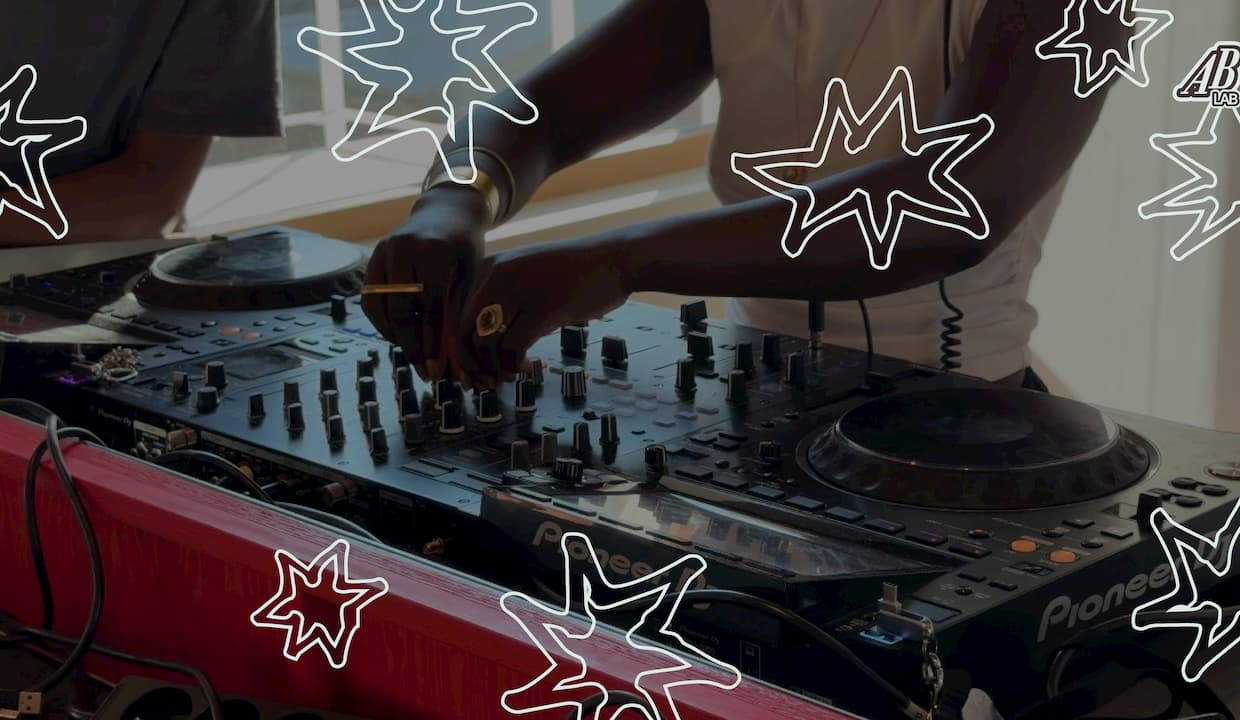
A trend started evolving a couple of years ago. More and more FLINTA* people started standing behind the deck, instead of dancing in front of it.
It's a tale as old as time. Subcultures are born from countering the mainstream and making space for communities that don’t feel represented.
The more a subculture expands, the more it becomes popular and the mainstream starts using some of its elements as quirks, stripping away the context they were born in.
And suddenly, a culture based in community, created with very clear intents, becomes a palatable aesthetic to the broader public.
The past few years, being on the dance floor has felt different than what it was 10 years ago. Prices have risen but the quality has declined. There are events where dancing almost feels like an anomaly, because the night is mainly curated to be caught on camera.
I think a lot of people who are actually in dire need of these spaces, grew tired and took it in their own hands.
But the current landscape has changed and there are new obstacles to face.
How can we protect nightlife? Is nightlife even “night” nowadays? What does artist care look like? How do you find a balance between local and international talent?
I can’t promise you’ll have a concrete answer to these questions, but if you’re part of a collective that is active in electronic music and nightlife scene, you’re invited to join the conversation on June 13.
The gathering will be hosted by Souria Cheurfi (Psst), it will be an informal and open dialogue with other people of the scene. Your perspective, opinion, experiences, and ideas are incredibly valuable <3
₊‧°𐐪♡𐑂°‧₊ Hey! I’m Olly, the content creator of AB Lab. Thank you for reading!
If you want to stay up-to-date with what goes on in our creative playground, you can follow us on Instagram or subscribe to the monthly newsletter. ₊‧°𐐪♡𐑂°‧₊